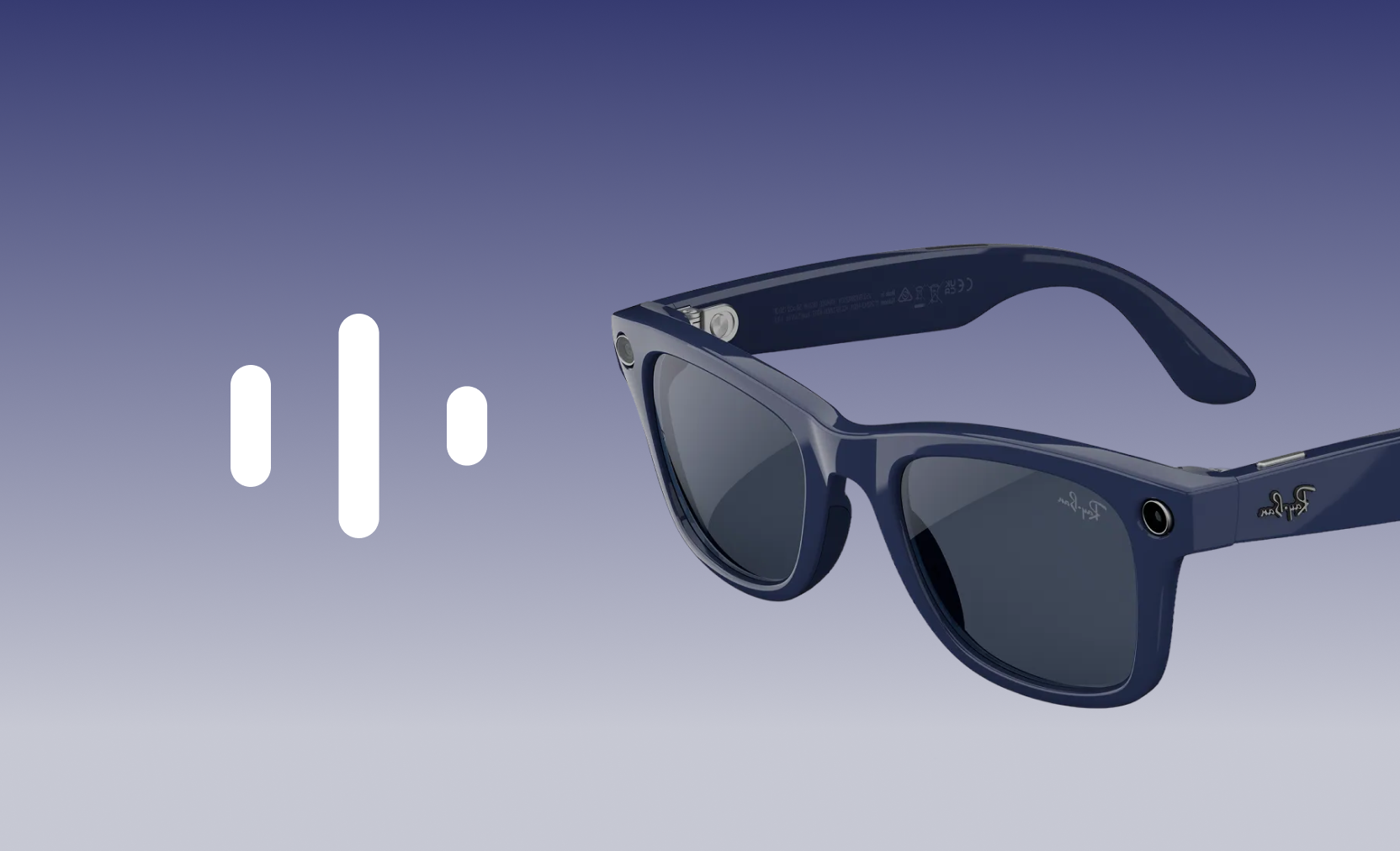
AI Smart Glasses Are Having a Real Moment in 2026
For years, AWE has been the biggest event on the XR calendar. If you attended this year, one thing became obvious by the end of the conference: the conversation had shifted.
The focus wasn't on VR headsets or the metaverse. It was on smart glasses.
Snap unveiled Specs, XREAL demoed their upcoming Project Aura, and VITURE announced Helix, billed as the first AI safety glasses built on NVIDIA's XR platform. Nearly every major announcement pointed toward the same trend: wearable AI and AR are becoming the industry's next frontier.
The momentum extends beyond AWE. Google and Samsung announced Android XR glasses, thirteen years after the original Google Glass Explorer Edition. Startups like Mentra, Brilliant Labs and Even Realities are attracting significant funding, while established hardware companies are investing heavily in bringing AI-powered glasses to market.
For enterprises that remember the rise and fall of Google Glass, it's reasonable to wonder whether this is another cycle of hype. But the market tells a different story. Smart glasses shipments grew 167% year over year in 2026 and IDC now forecasts roughly 13.6 million units for the full year, climbing to 27.3 million by 2030.
Smart glasses aren't a new idea, and technology has existed for years. So what's different this time? And what's driving enterprise adoption now?
Hardware improved steadily and AI skyrocketed
The physical building blocks for the newest generation of smart glasses have been improving steadily for more than a decade. Cameras got sharper, batteries lasted longer, displays got clearer. Those are real gains. But none of them happened as fast, or as suddenly, as what's happened with the AI running on top of them in the past few years.
Chips like Qualcomm's Snapdragon AR1 family are specifically designed for smart glasses, enabling AI capabilities on a lightweight frame. Alongside that, AI models are advanced enough to feel like a real conversation. A natural exchange needs latency under roughly 500 milliseconds, and Google's Gemini Live API and OpenAI's gpt-realtime are now built to hit that while handling audio and video together, something that wasn't really possible a few years ago.
Together, capable silicon and fast, multimodal AI are why smart glasses finally feel useful while being easy to wear.
Where smart glasses are already working
Meta's Ray-Ban accounted for more than two-thirds of the smart glasses market in the first quarter of 2026. Adoption is largely on the consumer side right now, but enterprises are quietly evaluating how to leverage the new generation smart glasses, especially for frontline operations.
A useful way to spot where smart glasses actually work is to look for jobs built around hands-free reference or communication, where information or expertise needs to reach someone in the middle of a task, like a technician with both hands on a repair or an inspector who can't stop and pull out a phone the way someone can at a desk. Glasses put the camera and microphone where the work is happening.
Warehouse and logistics
DHL's vision picking program replaced paper pick lists with glasses that display order and location information directly in a worker's view. The pilots ran on Vuzix M100/M300, hardware from the first wave of enterprise smart glasses. This is the most mature enterprise smart glasses use case that exists today, largely because it doesn't require AI at all, just a display and a barcode scanner. The lighter, more affordable, standalone glasses shipping now could make this kind of deployment easier to justify and faster to roll out at companies that couldn't make the case for the first wave of hardware.
Field Service and remote repair
Lightweight, standalone glasses are a natural fit here: hands-free video and voice, without the weight or cost of a dedicated industrial headset. Meta's Ray-Ban Display is already being positioned for exactly this: a technician streams a live view to a remote expert, who marks hotspots on what they're seeing and talks them through the repair, without either party touching a phone. Viture's Helix takes the same idea further and swaps the human expert for an AI one. Built on Nvidia's XR platform, it coaches a wearer through a procedure in real time and captures a full record of the shift for compliance, running standalone with no phone required. Helix isn't shipping until early 2027, but it points at where the category is headed: expertise built into the glasses themselves.
Inspection and compliance documentation
Inspection and compliance work is mostly paperwork wrapped around a walkthrough: a technician moves through a site, then has to reconstruct what they saw and said into a formal report afterward. Smart glasses streamline the process by turning captured recordings into structured reports automatically. Airwave is one example, ANSI-rated safety glasses that turn recorded fieldwork directly into inspection reports, hazard analyses, and on-demand training answers, with no forms and no separate app.
What's next
What's not clear is how using smartglasses hold up at fleet scale. Regardless of use case, the operational reality is the same: this is now a device category that has to be provisioned, updated, and secured like any other.
When we started ManageXR, VR devices were in a similar place. Real use cases, real adoption, but no infrastructure to enable scale. So we built it.
We're excited about where this is headed, and we're actively building support for smart glasses into ManageXR. If your team is exploring what smart glasses could do for your organization, we'd like to hear from you.